Here It is: VW’s Tiguan Against Its Big Rivals
The diesel SUV is not dead; it simply put on a bespoke suit. In a South African market obsessed with long-haul drivability and rising fuel costs, the mid-size diesel family car remains a fiercely contested battleground. The diesel SUV is not merely surviving; it has evolved. Just look at the Volkswagen Tiguan.
While global markets rush toward electrification, local buyers still demand the muscular torque and frugal efficiency of a refined oil-burner. For anyone searching for the best diesel SUVs South Africa has to offer, the landscape is fiercely competitive. At the heart of this battle sits our comprehensive VW Tiguan 2.0 TDI R-Line review. However, to truly understand its value in today’s market, we must conduct a definitive mid-size diesel SUV comparison, pitting the Wolfsburg favourite against its most formidable rivals from Asia.
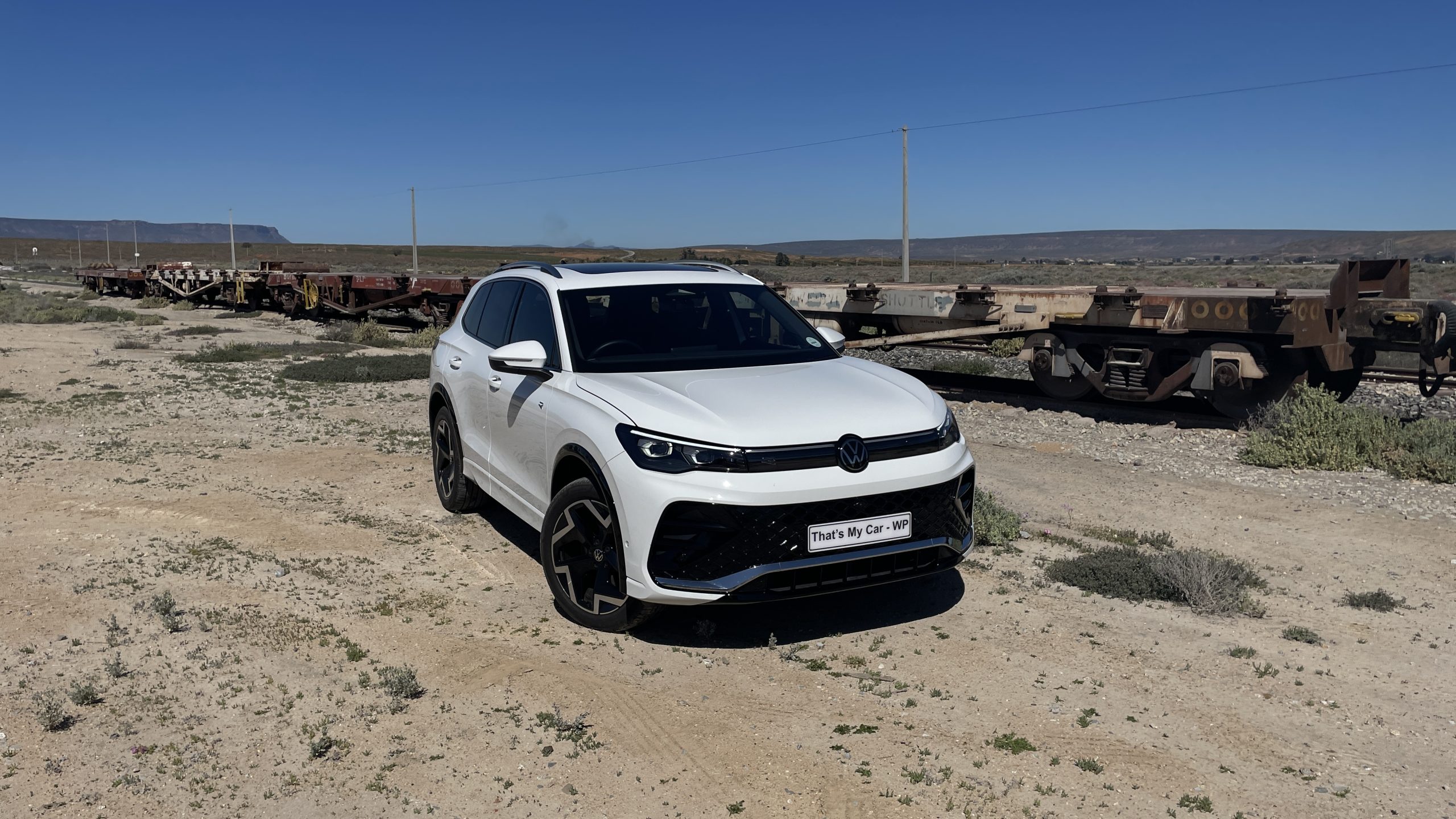
The Benchmark: Volkswagen Tiguan 2.0 TDI R-Line

At R855 100, this premium German automotive brand delivers an execution that feels unapologetically upmarket. Under the sharply sculpted bonnet lies a 2.0-litre powerplant pushing out a conservative 110 kW and 340 Nm of torque. This output is channelled through a highly responsive DSG dual-clutch transmission, which handles gear shifts with clinical precision in everyday traffic.
Where this vehicle truly asserts itself is through the Tiguan R-Line 4Motion capabilities. It feels incredibly planted on both slick tarmac and loose gravel, distributing power intelligently across all four wheels. Yet, critically speaking, 110 kW feels slightly anaemic for a heavy vehicle at this price point. When evaluating the ever-popular Volkswagen Tiguan vs Hyundai Tucson debate, the Tiguan’s trump card is its role as a supremely comfortable, hushed long-distance cruiser, returning a highly rational 6.6 L/100km.
READ | Volkswagen Tiguan 2.0TDI R-Line Upholds Premium
The Powerhouse: Hyundai Tucson 2.0D AWD N Line

If the Tiguan is the sensible accountant in athletic wear, the Tucson (priced around R859 900) is the actual athlete. When examining Hyundai Tucson 2.0D AWD N Line performance, the raw numbers speak volumes. Hyundai decisively turns up the wick, extracting a monstrous 137 kW and 416 Nm from its 2.0-litre block.
Paired with a conventional 8-speed automatic, the power delivery is a brutal, satisfying surge that immediately exposes the Tiguan’s power deficit. Furthermore, for buyers concerned with turbodiesel towing capacity, this massive torque figure translates into effortless hauling for caravans or trailers. While it commands a slightly thirstier 7.4 L/100km, the sheer overtaking confidence it provides makes it a formidable, heavy-hitting contender.
READ | 2025 Hyundai Tucson 2.0D Executive Review
The Efficiency Master: Kia Sportage 1.6 CRDi GT-Line Plus

In the hunt for fuel-efficient family SUVs SA, Kia takes a distinctly pragmatic approach. Instead of offering a 2.0-litre, local buyers get a punchy 1.6-litre mill. The Sportage (R790 995) produces a respectable 100 kW and 320 Nm, proving that a smaller displacement does not equal irrelevance.
The standout metric here is the Kia Sportage 1.6 CRDi fuel consumption, boasting an incredible claimed 5.0 L/100km. Navigating the classic AWD vs FWD crossover dilemma, Kia opts to send power exclusively to the front wheels via a 7-speed DCT. It trades off-road prowess for unmatched urban efficiency, wrapped in a cabin that boasts a stunning curved digital display that rivals vehicles twice its price.
| Model | Price | Engine | Output | Drivetrain | Claimed Consumption |
| VW Tiguan 2.0 TDI R-Line | R 855 100 | 2.0L Turbodiesel | 110 kW / 340 Nm | AWD (7-spd DSG) | 6.6 L/100 km |
| Hyundai Tucson 2.0D AWD N Line | R 859 900 | 2.0L Turbodiesel | 137 kW / 416 Nm | AWD (8-spd Auto) | 7.4 L/100 km |
| Kia Sportage 1.6 CRDi GT-Line | R 790 995 | 1.6L Turbodiesel | 100 kW / 320 Nm | FWD (7-spd DCT) | 5.0 L/100 km |